Thứ Tư, 25 tháng 12, 2019

5 Best Tap Water Conditioners –Indispensable Things For Your Fishtank (2019-Review)

happy-fish-in-dechorinated-water
Happy fish in dechorinated water

So you just got yourself a fish tank. Congratulations! You are now a proud fish owner. Perhaps you have plenty of experience in raising fish in the past and is one of the seasoned veterans. No matter which category you fall into, you are here to learn about water conditioners for your pet fish. Raising fish is a delicate task and you did the right thing by coming here.

As you may already know, you need a water conditioner to detoxify the water so as to make it habitable for your fish.

But a quick Google search later and you realize that the market is chock-full of water conditioners. For a beginner fish owner, they may feel overwhelmed. It is enough to give a veteran fish owner a headache.

But don’t worry because we are here to help.

In this article, we will recommend some of the best water conditioners and tell you exactly why they are our top picks.

Other than that, we will go over how a water conditioner works and other points of considerations so you can make informed purchase decisions.

To begin, let us talk about water conditioners. What are some of the things you should consider when purchasing one?

Points of Consideration when Choosing a
Water Conditioner

Not all tap water conditioners
are created equal, but what we recommend here should cover all your needs. For
future reference, there are a few things to keep in mind when you are in the
market looking for a tap water conditioner:

The Tank Type: Freshwater or Saltwater

First and foremost, you should know what kind of fish you raise. Are they freshwater or saltwater fish?

But you do not need to stress too much here because you can get away with almost any water conditioner. Many water conditioners can be used with both salt and freshwater tanks. You can tell whether it is for salt or freshwater by reading the label.

water-conditioner-label

In fact, you should read the label. Certain water conditioners are for either saltwater or freshwater. And it is better to spend a few seconds reading the label than regret your purchase later.

This is especially true if you own a saltwater tank because it is not as straightforward as a freshwater tank.

You should go the extra mile and
find out what other compounds your saltwater tank may need and then supplement
that with the right water conditioners and treatments. Your fish will
appreciate it.

What Kind of
Things It Can Remove From Your Tank

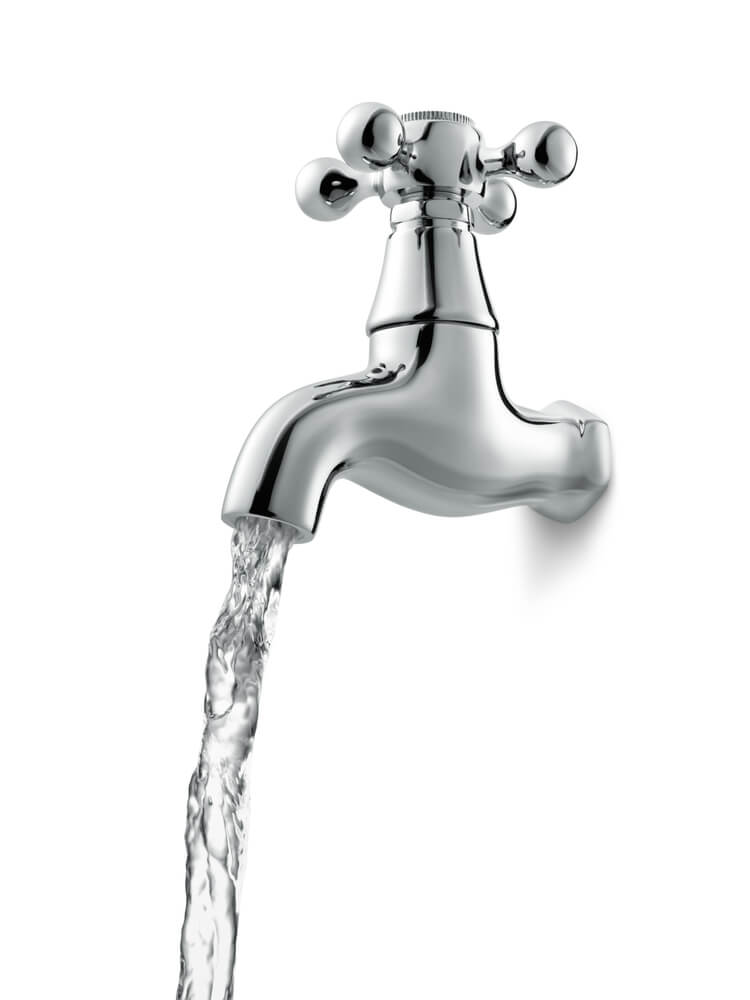
Before we can understand why water conditioners are important, we need to understand why the water that comes from the tap is safe to drink.
tap-water

In the past, the water suppliers
used chlorine to disinfect water, so you can drink without having diarrhea. But
chlorine is toxic for your fish.

There are a few ways to remove
chlorine such as boiling the water or let it sit for a long time. The best solution
is to use sodium thiosulfate. It can remove chlorine immediately.

Now, depending on where you live, your water may use another compound called ammonia. This combined with chlorine, creates chloramine.

So even if you apply sodium thiosulfate to your tank, you will only take away the chlorine, not ammonia.

Chlorine, ammonia, let alone chloramine, are all toxic for your fish.

Depending on the products, you can remove and detoxify:

[su_list icon="icon: pencil" icon_color="#000008"]

  • Only Chlorine and heavy metal
  • Chlorine, chloramine, ammonia, and heavy metal
  • Chlorine, chloramine, ammonia, heavy metal and also nitrite & nitrate

[/su_list]

So it is worth checking which category your water conditioner falls under. Some water conditioners help in keeping the nitrite and nitrate under control.

Some of them even contain additives that improve the slimy coating of your fish.

Product Concentration

Product concentration is just as
important. Some water conditioners have higher concentration formula than
others. If you only need a small amount to purify a large amount of water, then
it is high in concentration.

It is possible to over-condition
your water, especially with a highly concentrated formula water conditioner.
While some say that you are unlikely to over-condition your water, some people
have reported that their pet fish died when they used a highly concentrated
conditioner in their small tank.

[su_note note_color="#e2e2e2"]So, conditioners high in concentration should be used to detox a large amount of water. If you have a small tank, it is a better idea to use a conditioner with less concentration. [/su_note]

Make sure you follow the instructions and do the math so you know exactly how much water dechlorinator you need in a gallon.

Other Functions

Some water conditioners do more
than just detoxify the water. It is worth investing in water conditioners that
have other special properties.

Additional coating

Many fish owners look for
protective properties in their water conditioner. That comes in the form of slime coating or other substances that protect your fish’s sensitive mucous
membrane and gills from scratches
. The additional coating can help your
fish heal from those scratches.

Beneficial minerals and bacteria

To make your aquarium feel like
home, you want to recreate your fish’s natural environment. Water conditioners
only make the water habitable, but not comfortable. So, you want to introduce beneficial minerals and bacteria. Some
water conditioners can do that and a few even reduce stress in your fish and promote vitality, activity, and breeding
behaviors.

Top 5 Tap Water Conditioners Comparison
Table

  1. Seachem
    Prime: Best all-rounder, 9.4/10
  2. API
    TAP Water Conditioner: Price-Efficient, 9.2/10
  3. Tetra
    AquaSafe Plus: Slime-coating additive and minerals, 9/10
  4. Aqueon:
    Betta Bowls Specialist, 8.6/10
  5. Fluval:
    De-stressor formula, 8.5/10

1. Seachem Prime Fresh and Saltwater Conditioner

seachem-prime-fresh-and-saltwater-conditioner

The Seachem Prime water conditioner is the best tap water conditioner you can find. It is advertised to have the ability to detoxify the water by removing chloramine, chlorine, ammonia, nitrite, nitrate, copper, lead, and other harmful substance from the water in an instant.

Another huge plus it has going
for it is its efficiency. You only need a
small amount to detoxify a large amount of water
. That also means you can
use this conditioner for a long time.

Pros:

[su_list icon="icon: check" icon_color="#3ef323"]

  • Has the most customer’s satisfaction and rating
  • Works with biofilter to remove ammonia, nitrite, nitrate, and heavy metals
  • Flexible application for different conditions
  • Instant and permanent detoxification
  • Clear and detailed usage instructions
  • Has the second-highest concentration

[/su_list]

Cons:

[su_list icon="icon: remove" icon_color="#FF4500"]

  • May be smelly, but not dangerous for the fish

[/su_list]

[su_button url="https://www.amazon.com/Seachem-Prime-Fresh-Saltwater-Conditioner/dp/B01MRSR0K1/ref=as_li_ss_tl?keywords=Seachem+Prime+Fresh+and+Saltwater+Conditioner&qid=1577282032&sr=8-2&linkCode=ll1&tag=ap250e-20&linkId=6851db4a6a7807c786c4e8a257a15e97&language=en_US" target="blank" style="flat" background="#ef352d" size="7" center="yes" radius="5" icon="icon: hand-o-right" icon_color="#ffffff" text_shadow="0px 0px 0px #000000" rel="nofollow"]Check price on Amazon[/su_button]

The recommended dosage is 5 ml
per 200l (or 50 gallons). It is to be applied when you change the water in your
tank or to be applied in the water that you add to the tank. But you do not
need to break out your measuring cup because you can use the cap. Each cap
thread is about 1ml if you want to purify a lesser amount of water.

If you want to add the
conditioner directly into your fish tank, make sure you base the amount according
to the volume of the water in the tank.

[su_note note_color="#e2e2e2"]Note: Here, it is worth pointing out that you can add the conditioner directly, but it is safer to add it to the new water, then pour it in.[/su_note]

The dosage changes depending on the situation.

[su_list icon="icon: pencil" icon_color="#000008"]

  • If the water has a high chloramine concentration, consider using double the dose.
  • If you need to remove nitrite in your water in an emergency, you should use 5 times the normal dose.
  • If the water temperature is lower than 30 °C (86 °F) and the level of chlorine and ammonia are low, you only need to use half the dose.

[/su_list]

2. API Tap Water Conditioner

api-tap-water-conditioner

The API Tap Water Conditioner is also a favorite among many fish owners due to its concentration. This water conditioner has the highest concentration compared to all other water conditioners out there. It means you just need to pay the least amount of money in order to detoxify the water.

It removes many harmful waterborne chemicals such as chloramine, chlorine, and others to make your tap water habitable for your fish.

It also neutralizes other chemicals that can destroy fish gills, tissue irritation, and fish death.

Pros:

[su_list icon="icon: check" icon_color="#3ef323"]

  • Cheapest product
  • Cost-effective
  • Highest concentration
  • High customer’s rating and satisfaction

[/su_list]

Cons:

[su_list icon="icon: remove" icon_color="#FF4500"]

  • Too concentrated for small tanks

[/su_list]

[su_button url="https://www.amazon.com/API-CONDITIONER-Aquarium-Conditioner-16-Ounce/dp/B004LO9KSY/ref=as_li_ss_tl?ac_md=1-0-VW5kZXIgJDEw-ac_d_pm&keywords=API+Tap+Water+Conditioner&pd_rd_i=B004LO9KSY&pd_rd_r=e032dddf-a0eb-489b-9f59-760dac5595ae&pd_rd_w=W3nXR&pd_rd_wg=vEc9R&pf_rd_p=aba5dc0d-7593-4752-a14d-357ecc5c98cc&pf_rd_r=S6K8MN3093JR5TAY5AW2&psc=1&qid=1577281185&linkCode=ll1&tag=ap250e-20&linkId=5823b240aecc0dd70d2ba2f48ca0c71a&language=en_US" target="blank" style="flat" background="#ef352d" size="7" center="yes" radius="5" icon="icon: hand-o-right" icon_color="#ffffff" text_shadow="0px 0px 0px #000000" rel="nofollow"]Check price on Amazon[/su_button]

Having a high concentration product means you will not need to use as much conditioner to detoxify your water.

That means you won’t need as much conditioner to detoxify your tank, so the conditioner will last you a very long time. This makes the API conditioner a great value.

The recommended dosage is just 1ml per 60 liters (15 US gallons) of water. If your water contains chloramine, then you need 3ml per 60 liters (15 US gallons) of water.

It is best that you use it if
your aquarium contains 20 gallons of water or more. Although the product is
concentrated, you can still use it for small water tanks. You just need to do
some math to find the right dosage.

Finding the right dosage should not be difficult. You will get a detailed instruction that comes with the conditioner. You just need to follow the instructions and you should not have any issue detoxifying the water. This water conditioner works with both saltwater and freshwater tanks.

3. Tetra AquaSafe Plus Water Conditioner

tetra-aquasafe-plus-water-conditioner

Another great aquarium dechlorinator in
our selection is the Tetra AquaSafe Plus. The AquaSafe Plus can detoxify the
water the same way as the Seachem Prime, although the company did not promise
that the effect will be instantaneous. But it is fast enough – at a few
seconds, as advertised.

Another thing this conditioner has going for it is its additive.

That means when you apply this to your water, your fish will get the slimy coating which helps protect them from abrasions and heal wounds faster.

Pros:

[su_list icon="icon: check" icon_color="#3ef323"]

  • Bottle is a dispenser in itself.
  • Contains seaweed extracts to develop good filter bacteria.
  • Includes vitamins and minerals work to increase the vitality, breeding behavior and activity of your pet fish.

[/su_list]

Cons:

[su_list icon="icon: remove" icon_color="#FF4500"]

  • Low concentration.

[/su_list]

[su_button url="https://www.amazon.com/Tetra-AquaSafe-Conditioner-Dechlorinator-33-8-Ounce/dp/B00176CVK8/ref=as_li_ss_tl?ac_md=0-0-dGV0cmEgYXF1YXNhZmUgcGx1cw==-ac_d_rm&keywords=Tetra+AquaSafe+PLUS&pd_rd_i=B00176CVK8&pd_rd_r=94d347af-67d4-4922-99be-f76079233987&pd_rd_w=a3WTg&pd_rd_wg=rLcum&pf_rd_p=6d29ef56-fc35-411a-8a8e-7114f01518f7&pf_rd_r=SY3AN4GTNEN3NSTYVKMT&psc=1&qid=1575563374&linkCode=ll1&tag=ap250e-20&linkId=c5680c1f70123e45ab7295d58c8100aa&language=en_US" target="blank" style="flat" background="#ef352d" size="7" center="yes" radius="5" icon="icon: hand-o-right" icon_color="#ffffff" text_shadow="0px 0px 0px #000000" rel="nofollow"]Check price on Amazon[/su_button]

Another thing worth pointing out is that the Tetra AquaSafe Plus contains beneficial materials that are lacking in normal tap water. These materials help your fish thrive.

The recommended dosage is one teaspoon (5ml) for every 10 gallons of water.

4. Aqueon Tap Water Conditioner

aqueon-tap-water-conditioner

The Aqueon water conditioner works best when you have a small tank. 

[su_note note_color="#e2e2e2"]It specializes in detoxifying a small amount of water with limited filtration and water circulation and freshwater tanks. [/su_note]

This conditioner also contains additives that restore the slime coating of your fish to help them heal and protect them from abrasions.

Pros:

[su_list icon="icon: check" icon_color="#3ef323"]

  • Can also remove ammonia
  • Perfect for small betta bowls

[/su_list]

Cons:

[su_list icon="icon: close" icon_color="#FF4500"]

  • Lowest concentration product
  • Only for freshwater tanks

[/su_list]

[su_button url="https://www.amazon.com/Aqueon-Aquarium-Water-Conditioner-16-Ounce/dp/B0010729SS/ref=as_li_ss_tl?ac_md=0-0-YXF1ZW9uIHdhdGVyIGNvbmRpdGlvbmVy-ac_d_rm&keywords=Aqueon+Water+Conditioner&pd_rd_i=B0010729SS&pd_rd_r=49429fdb-339c-4aac-8e1d-0a8c2d4e2cb9&pd_rd_w=xYt45&pd_rd_wg=dG8Jo&pf_rd_p=6d29ef56-fc35-411a-8a8e-7114f01518f7&pf_rd_r=WJZHSP0RMEX5SDEY85PH&psc=1&qid=1575566650&linkCode=ll1&tag=ap250e-20&linkId=5a18f9d7ccdfafece3c6c586505a031a&language=en_US" target="blank" style="flat" background="#ef352d" size="7" center="yes" radius="5" icon="icon: hand-o-right" icon_color="#ffffff" text_shadow="0px 0px 0px #000000" rel="nofollow"]Check price on Amazon[/su_button]

Although it only works with freshwater tanks, it is still a great aquarium dechlorinator because of the additives that give the slime coating.

The recommended dosage is 5ml per 10 US gallons. You should receive a detailed manual that comes with the water conditioner, so you can detoxify your water properly.

It is advertised that your water
will be detoxified instantly the moment you apply the conditioner. But just to
be safe, purify the tap water in a separate container and let it sit for 30
minutes or so before you add it to your tank.

5. Fluval Water Conditioner

fluval-water-conditioner

Finally, we would like to present the Fluval water conditioner. It removes chlorine, chloramine, as well as other toxic metals.

This water conditioner also comes with a special formula that reduces stress for your finned friends.

Pros:

[su_list icon="icon: check" icon_color="#3ef323"]

  • Protects the sensitive mucous membrane of the fish
  • Stress-reducing formula

[/su_list]

Cons:

[su_list icon="icon: remove" icon_color="#FF4500"]

  • The second-lowest concentration
  • Large amount per dose means you will need to buy a new one sooner

[/su_list]

The recommended dosage is 5ml per 10 US gallons. If your water contains chloramine or you want to provide additional protection to your fish’s scales and fins, consider applying 10ml per 10 US gallons.

Our Picks:

The Best One –
Seachem Prime

Okay, so why did we wholeheartedly recommend the Seachem Prime water conditioner? Based on over 3,000 ratings on Amazon and other reviews, we can say with certainty that this is the best tap water conditioner.

For one, it is very potent. You
only need a small amount to detoxify a huge quantity of water. That means your
product won’t run out for a long while.

Another reason is that the detoxification effect is almost instantaneously, so you do not need to sit around waiting anxiously until the conditioner settles in.

[su_button url="https://www.amazon.com/Seachem-Prime-Fresh-Saltwater-Conditioner/dp/B01MRSR0K1/ref=as_li_ss_tl?crid=1IKEK0260KCLA&keywords=tap+water+conditioner+aquarium&qid=1575563007&sprefix=tap+water+condi,aps,477&sr=8-2&th=1&linkCode=ll1&tag=ap250e-20&linkId=c72e6da8698311708a5407f0becdb563&language=en_US" target="blank" style="flat" background="#ef352d" size="7" center="yes" radius="5" icon="icon: hand-o-right" icon_color="#ffffff" text_shadow="0px 0px 0px #000000" rel="nofollow"]Shop now at Amazon.com[/su_button]

The Most Affordable One – API

The API TAP water conditioner has received recognition from many customers as one of the best tap water conditioners.

Unlike the Seachem Prime, the API is odorless. The smell from Seachem Prime can be unbearable for some people, so the API is an excellent alternative.

Other than that, the API conditioner also has the highest concentration among all the water conditioners in the market.

That means you only need to apply a small amount to purify a large amount of water. Just a bottle of the API conditioner can last you a very long time, making it a very cost-efficient solution.

[su_button url="https://www.amazon.com/Seachem-Prime-Fresh-Saltwater-Conditioner/dp/B01MRSR0K1/ref=as_li_ss_tl?crid=1IKEK0260KCLA&keywords=tap+water+conditioner+aquarium&qid=1575563007&sprefix=tap+water+condi,aps,477&sr=8-2&th=1&linkCode=ll1&tag=ap250e-20&linkId=c72e6da8698311708a5407f0becdb563&language=en_US" target="blank" style="flat" background="#ef352d" size="7" center="yes" radius="5" icon="icon: hand-o-right" icon_color="#ffffff" text_shadow="0px 0px 0px #000000" rel="nofollow"]Shop now at Amazon.com[/su_button]

Related Questions

Now that you know what water
conditioner is best for your needs, what else is there to know about water
conditioners?

Actually, there are a few more
things we want to cover. All of these tips we will give you below will help you
get the most out of your water conditioner and keep your fish alive and happy.

What is a Tap
Water Conditioner

A tap water conditioner is a
detoxifier that you apply to the tap water to purify it and to make it safe for
your fish. There are many types of water conditioners, which we will cover
later. But the general idea is that it neutralizes toxic elements inside the
water.

Many commercial tap water
conditioners can purify both fresh and saltwater, although it is worth reading
the label first. Other than that, you may want to understand what kind of
substance your water supplier uses to detoxify their tap water so you can get
the right conditioner.

How Does it Work?

A tap water conditioner works when you apply it to the water. Depending on the product, it will seep into the water and cause a chemical reaction with certain toxic elements in the water, neutralizing them.

That means the water conditioner converts the toxic substance into a harmless one that either stays in the water or is removed by your filter.

Certain water conditioners also contain special additives that add beneficial minerals to the tank. That could promote good bacteria, activities in your fish, or provide an additional protective coating.

Some even contain substances to help keep your tank clean, such as those that neutralize nitrate that promotes algae growth.

Water Conditioner
Types

There are three main types of
water conditioners, each of which has their own special functions. Knowing these
will help you choose the correct conditioner for your tank. They are:

De-Chlorinators

This is the most basic form of
water conditioner, albeit almost outdated nowadays. Back in the day, water
suppliers use chlorine to make tap water safe to drink. But the chlorine is not
safe for the fish. That is why you need dechlorinators to purify your water.

Nowadays, things got more
complicated because more and more water suppliers use chloramine, which is
safer for you but not for your fish. Here, dechlorinators are not enough to
purify the water. This is where chloramine neutralizers come in.

Chloramine
neutralizer

Chloramine neutralizers are designed specifically to remove chloramine in your water. Chloramine is the combination of chlorine and ammonia, both of which are toxic for your fish.

Using dechlorinators alone will leave ammonia in the water. As such, you want to use a chloramine neutralizer to make your water safe for your fish.

Complete
Conditioners

The complete conditioner does what it says on the tin. This is perhaps the best option for many beginner fish owners because you are getting everything in one neat package.

The complete conditioner can remove every toxic substance in the water that may harm your fish. That means it will remove chloramine, chlorine, ammonia, and other toxic metals such as lead and copper from your tank.

If you are unsure what kind of substance your water provider used to treat their water, then the safest option is to detoxify it with a complete conditioner.

How and When to
Use It

Using a water conditioner is pretty straightforward.

You simply have to measure how much water you need to purify, the recommended dosage, and calculate how much water conditioner you need.

Then, pour the conditioner into the water you want to purify in a separate container before you pour the purified water into your fish tank. Make sure you follow the instructions closely.

So, how often should you use water conditioners?

It depends on how often you change or add new water to the tank. It is best that you change your water weekly, so you should use water conditioners during the water change.

Proper Usage

Applying a water conditioner is
simple, but you should exercise caution. There are two common mistakes that
both rookie and veteran fish owners make. They are:

Purify, then Pour

The most common mistake that many fish owners make is that they add the conditioner while the fish is still inside the water.

This can quickly lead to the death of all your fish in one fell swoop. Therefore, make sure you detoxify the water first before you add it to the tank.

While some water conditioners claim that it can detoxify the water in a matter of seconds, it is best to let it sit for a few hours. By then, the chemical reactions should be completed and the water should be safe and habitable for your fish.

It is better to wait a bit longer than having to deal with the loss of some, if not all, your fish.

You see, when you put unpurified tap water into the tank, then add the conditioner, the chlorine and chloramine may not be removed immediately. Your fish can still come into contact with this toxic substance and can die from it.

So, let the conditioner do its magic before you add the newly-purified water in.

Use the Right Dosage

It’s not just the waiting time, either. You also need to use the right amount or dosage.

You can get away with overusing the conditioner, but it can depend on the product concentration and the manufacturer.

Some designed their products to be safe even when overused. Even so, it is still good practice to use the right dosage.

So, how many drops do you need in a gallon?

It depends on the conditioner you use. There should be a pamphlet that comes with the conditioner that will tell you everything you need to know. Some conditioners come with a cap that doubles as a measuring cap for just the right dosage.

How to Make Tap Water Safe for Your Fish
without Conditioner

If you wish to purify your water without using a water conditioner, then you have a few options at hand.

You can let it sit, which can take 4 and a half days for 10 gallons of water, or use ultraviolet lights, circulation, and aeration to speed up the process.

However, the best and quickest method is to boil the water. On average, you only need to boil 10 gallons of water for 6 to 8 minutes to completely remove chlorine.

But, chloramine is a different story. What’s the difference?

Chlorine in the water can evaporate if you let it sit after a while. Chlorine is “free” and it is instilled into the water using pipe pressuring. So when the water leaves the pipe, chlorine is no longer contained by the pressure and can start to evaporate.

But chloramine does not evaporate as easily. You will need to spend more time boiling the water to completely remove chloramine. So, how long does it take to purify via boiling?

First, test your water to see the ppm ( parts per million) level of your water. When you have that number, compare it to the list below and multiply or divide accordingly:

  • 10 gallons for 1 ppm of chlorine needs 4 minutes of boiling
  • 10 gallons for 1 ppm of chloramine needs 65 minutes of boiling

So, if your water tests for 2 ppm of chloramine, then you may need up to 130 minutes for just 10 gallons.

It is worth checking with your water provider to know whether they use chlorine or chloramine in their water.

But as you can see, it takes a lot of time to boil away the chloramine or just chlorine in the water. This can be a big pain. Hence, if you can get your hands on water conditioners, use those instead.

That way, you do not have to go through the trouble of boiling a lot of water when you need to add new water to the tank.

Conclusion

To conclude, we can say with certainty that Seachem Prime water conditioner is the best water conditioner. It is affordable, long-lasting, and very potent in its detoxification and time it needs to do so. It is an ideal option for both beginner fish owners and seasoned aquarium enthusiasts alike.

With all that said and done, this
is everything you need to know about water conditioners. With this knowledge,
you will be able to make informed purchase decisions. That means you will get
the most out of your money and your finned friends can swim happily inside your
fish tank.

Read the original article at :
5 Best Tap Water Conditioners –Indispensable Things For Your Fishtank (2019-Review)

Chủ Nhật, 13 tháng 10, 2019

Fish Tank Water pH – The Full Guide for Beginners

aquarium-pH

Well, you’ve probably heard of the pH of aquarium/fish tank water.

It’s an important factor to the quality of the water in your aquarium. Do you understand it?

Aquarium water pH is one of the key factors to keep your pet fish happy and alive.

It's important to monitor it and keep a balance. The
pH level is different for freshwater and saltwater tanks. It can also be
different for the kinds of fish you have especially freshwater.

This article will give you the full guide to the aquarium pH.

Let’s get started!

1. What is the water pH?

pH-scale

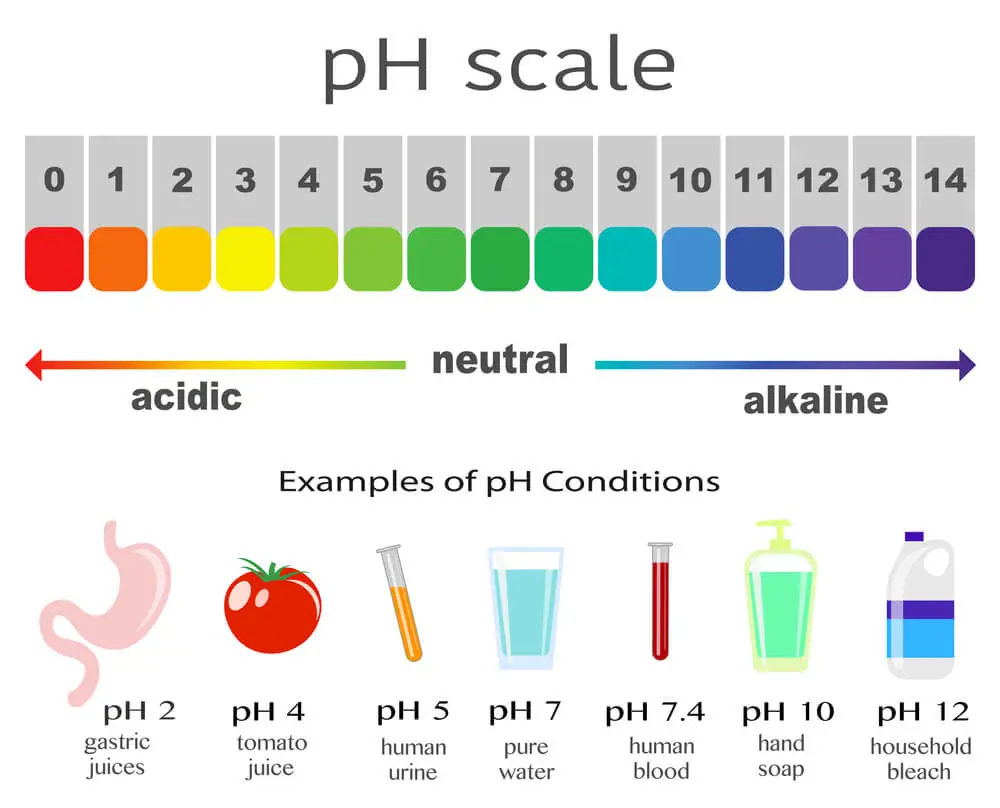
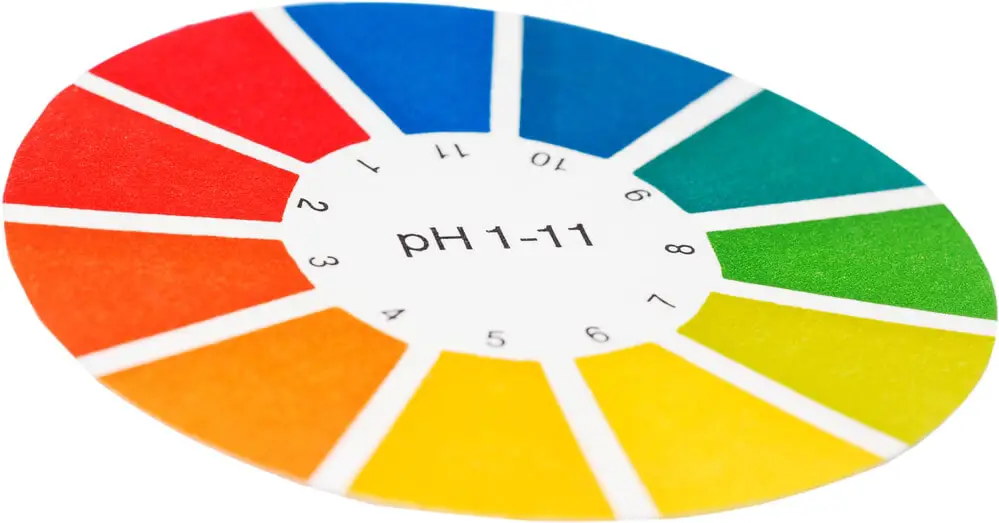
Aquarium water pH is the level of acidity or alkalinity in your tank. pH means the “potential for hydrogen”.

It is measured by a scale from 1 to 14.  Numbers below 7 means more acidity. Numbers above 7 mean more alkaline. The number 7 is neutral where there is no acidity or alkaline.

[su_note note_color="#e2e2e2"]Each number changes the actual result by a factor of 10. This means the more your tank is not balanced, the greater the potential harm to your fish.[/su_note]

For example, if your pet fish thrive in a pH of 7 but your aquarium
measures 8, your water is 10 times more alkaline then it should be. If the pH
is 9, then your fish are living in water that is 100 times more alkaline then
it should be.

Therefore, a small change in pH can be stressful and potentially fatal to your fish.

It is key to match your fish in your tank with the same range of pH. You also need to monitor the level of pH closely to ensure there are no major changes

2. The importance of pH

Remember, changes in the pH can be hurt your fish – make them sick – or could kill them.

Balancing your tank to the fish who live there is key to their health and safety.

  • Check the water you have before you decide on the fish you are going to get. Remember to let it stand for a minimum of 24 hours. Then test the water. That gives a true picture of the pH.
  • This is also important if you are moving your fish. The new tank must have the same pH.
  • If you are introducing new fish into your tank, make sure you check the pH in the water they arrive in.

Changes can affect how toxic your tank is. It can change the ammonia, nitrate, and kH (carbonate hardness of the water).

3. What is the ideal pH value for your pet fish?

The normal pH will depend on what kind of fish you have.

For example, goldfish have a normal pH of 7.0 to 7.5. Angelfish have a pH of 6.5 to 7.0. This doesn’t look that different but it is.

It is important to consider this when you are choosing the kind of fish you are getting.

Here is a list of some of the more popular fish and their pH levels.

  • Rams 5.0-6.5
  • Neon Tetra 5.8 - 6.2
  • Glowlight Tetras, Head-and-Tail-light Tetras, Rummynose Tetras, Serpae Tetras, Black Neon Tetras, Lemon Tetras & Red Phantom Tetras 5.5-7.5
  • Clown Loach, Harlequin Rasbora, Tiger Barb 6.0 - 6.5
  • Plecostomus 5.0 - 7.0
  • Hachetfish, Silver Dollar 6.0 - 7.0
  • Discus, Gouramis, Angelfish, Zebra Danio 6.5 - 7.0
  • Goldfish 7.0 - 7.5
  • Rainbowfish 7.0-8.0
  • Mollys, Guppies, Platys & Swordtails 7.0-8.5
  • African Rift Lake Cichlids 8.0-9.0

4. How to check the pH

pH-test-method

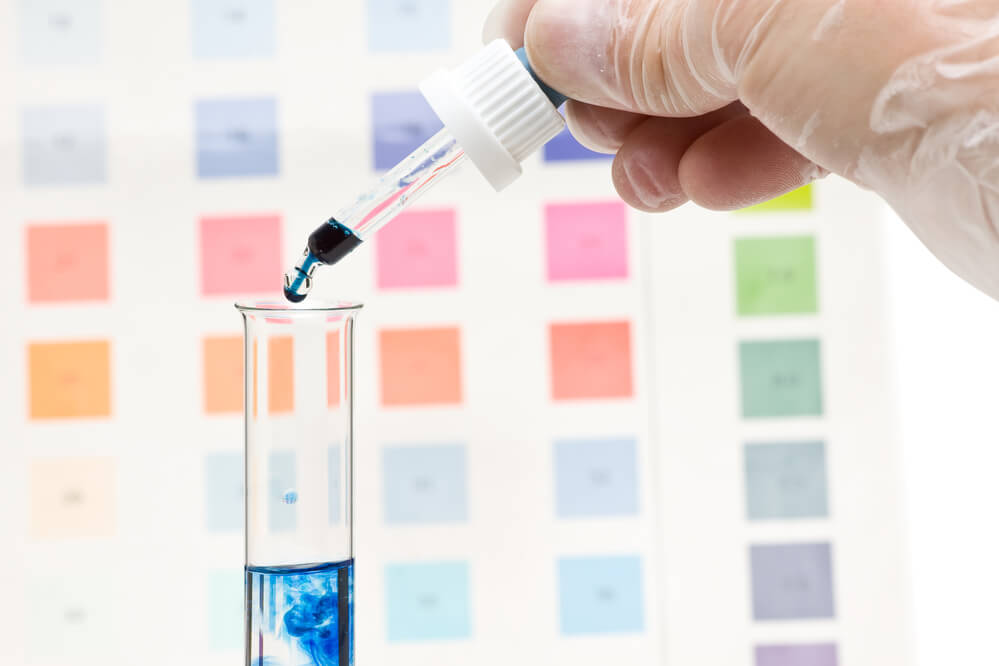
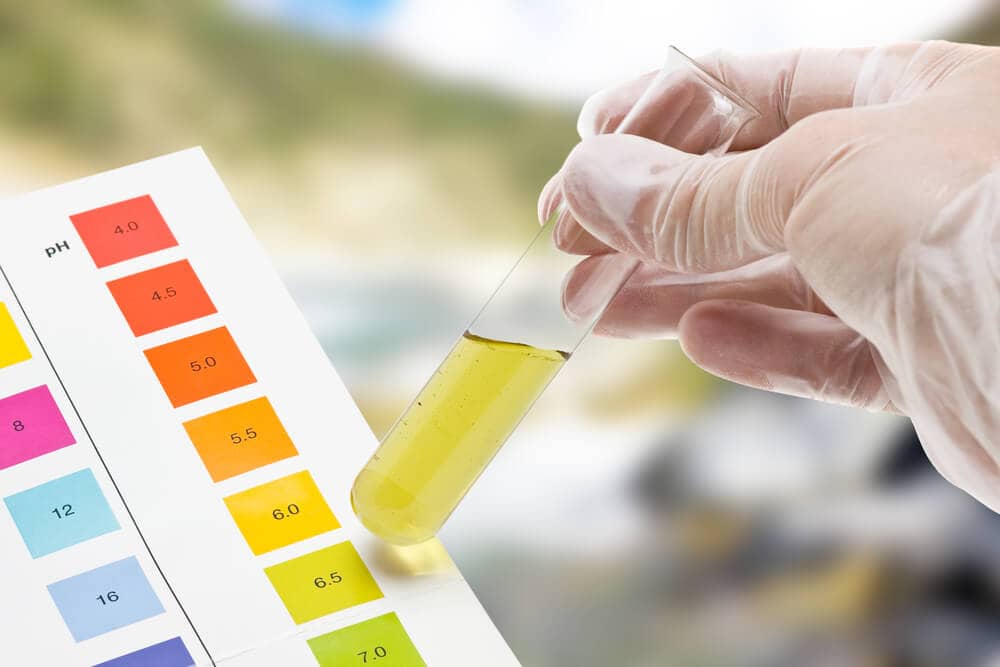
We have a full guide (in the link below) to help you test not only your aquarium pH but also other important factors.

Many of the test kits available test more than simply the pH value.

5. How often do you need to check the pH?

Before introducing your fish into the tank, check the pH. Compare it to the water the fish are arriving in. Make sure they are within 0.2 range.

Initially, it would be good to
test daily to make sure everything is settling correctly.

It also gives you a baseline for your fish.  A baseline tells you the pH range that your
fish are happy with. This also goes for adding more fish. Check the water they
arrive in.

Once your fish are settled, then
it is recommended to test every two weeks.

This helps build more information on the range that is keeping your
fish happy.

Get in the habit of doing this regularly and write down the
information. It’s best to keep a log book to record the daily numbers. This
gives you a trend that tells you if your tank has an issue.

Keep in mind some fish are adaptable so the pH level might not be true
to a standard. If they are happy, then don’t worry about it.

Listen to your fish! If you see
any alteration in their behavior, check the level.

If any of your fish get ill or die, check the pH level to make sure
that wasn’t the cause.

If you are treating your tank with medication, it is important to check
the pH level when you start treatment, on the final day of treatment and follow
up after a week.

It is a good habit to get into to check your pH level whenever you
introduce anything new to your tank. Wait a few hours and then check to make
sure what you have added hasn’t disturbed the balance.

  • Keep your test results in a log book.
  • Monitor the numbers for consistency.
  • pH level changes – slowly change your water.

The tank water and the water
source have different pH levels. If you are sure about the pH level of the
water source (maybe the tap water) then you can adjust the pH of your fish tank
just by removing some water in your tank and then add some new water.

Note:

It is important to pick a time of day that you are going to test and do it consistently.

Because the pH level changes during the day:

  • pH is usually higher during
    the day and lower at night.
  • It can change when things are
    added. New fish or new plants can affect the balance.
  • It can change when you add
    water or remove water.

It can change when you add anything to the tank. That sounds
complicated, right?

It’s not really. It is important to understand that little changes are normal.  It’s the size of any change that can be an issue.

It is also good to listen to your fish. If they are unhappy with the
water, they will tell you. Their behavior will indicate they have a problem.

6. What if the pH is not compatible with your pet fish?

You’ve checked the water in your tank and it’s not the numbers published as standards.

You think you need to do something right that moment.

STOP!

Any sudden changes even to what you think is a better level could hurt your fish.

Your pet fish can adapt. Listen to them. Watch their behavior.

The tank is like a living thing and can settle to different pH levels that your fish are happy with.

Option 1 – Leave your tank the way it is!

As long as your fish are happy and not showing any pH level stress, leave your tank alone. They have adapted to a different level.

It is better to adjust or acclimate your fish to the pH of your tank then to change things to fit an official number.

Option 2 – Making a Change

But if you want to alter your tank to the official pH levels for your fish, do it slowly.

Any rapid change can hurt your fish. A rapid change is measured by 0.2 within 24 hours.

  • Check the pH level of where you are getting your water.
  • Make sure it is close to the current level of your tank. 
  • Check the kH level as it can affect the pH change.
  • Make partial water changes slowly.
  • Vacuum your gravel and change your filter.

7. What are the signs of pH distress in fish?

pH shock can show in different ways:

  • Your fish might start swimming rapidly.
  • Some can try and jump out of the tank.
  • Some will swim on the surface.
  • Some may become poor in color. Some could have skin deterioration.
  • Their behavior will not be normal.

They will tell you – they have a
problem. How serious the problem is will depend on the size of the pH
imbalance.

8. What factors can affect pH value?

There are a variety of factors that can affect the pH level or value of your fish tank. That’s one of the reasons the general rule is, if your fish are happy, don’t make any changes.

But what are some of the factors?

a/ Water hardness & pH levels-the main factor

Water hardness is the mineral levels in the water of your tank.

Soft water has low mineral content. Hard water has higher mineral
content. Rainwater is usually soft as it has very little minerals. Tap and well
water usually has a calcium content which makes it harder.

It’s weird to think of water hardness. But it is very important. It has a close relationship to the pH level.

The hardness of the water directly affects the pH level and the health of your fish.

[su_note note_color="#e2e2e2"]If you don't have the hardness or softness of the water correct, you won't get the pH level correct.[/su_note]

Hardwater usually has a higher pH. Soft water usually has a lower pH.
The correct level of hardness or softness of the water depends on what kind of
fish you have.

See also: Basic Killer Tips on Aquarium Water General Hardness.

b/ Other factors

Water hardness is the main factor that directly affects the
pH of your tank. But that’s not the only thing that can affect your fish tank.

There are many other factors you need to watch when
monitoring the pH.

For example, factors below can lower the pH:

  • Decrease aeration
  • Using driftwood
  • Adding CO2
  • Increase nitrate
  • Increase pollutants and waste in the water
  • Using a water purifier
  • Overstocking your aquarium

Conclusion

Regular testing of your tank for pH levels is the key to creating a happy home for your pet fish.

The actual number or value of the pH level is not as important as the consistency of the number.

Any rapid or large change can hurt them. But listen to your fish. Do not overreact. If they are happy and behaving normally, leave them alone. Make sure you note the level in your logbook as it is potentially the new normal. Testing regularly allows you to keep an eye on their home.

If you have any questions about the pH of your tank , you can also leave a comments in the box below. I'd love to hear your question!

Read the original article at :
Fish Tank Water pH – The Full Guide for Beginners

Thứ Sáu, 27 tháng 9, 2019

Top Rated Aquarium Test Kits For Freshwater And Saltwater Tanks In 2019 (Review And Guide)

aquarium-water-pH-test-kit

Take two glasses of water from different sources and they are going to look the same. Your eyes are not going to tell you if one is better than the other.

BUT...

When it comes to your pet fish, this is important.

The composition of your tank water can directly affect your fish. This is true for both freshwater and saltwater aquariums. This is their home and you want the water to be good.

So, how do you make sure?

Today I’m going to tell you the way you can test the tank water quality for your lovely pet fish.

Here it is. The aquarium water test kit.

Before you can pick the best one for your tank, let’s talk about the important things you need to know!

1/ The important things you should know before buying an aquarium
water test kit.

What is an
aquarium water test kit?

An aquarium water test kit is equipment that helps you understand what your tank water is made up of.

Water has all kinds of different elements. Some of these elements are good and some are bad. Different levels can affect the health of your fish.

A test kit helps you understand things about your water. Regular testing is important as your tank levels can change. If your tank becomes unbalanced it will affect your fish. It can make them sick and die.

A test kit can include test tubes, testing solution, color cards and most important, an instruction guide.

Some kits are more user-friendly. Some take specialized knowledge to use. It is important to carefully choose which kit you are going to use.

Why should you use an aquarium test kit?

Let's go back to the glass of water. You don't know what is in it.

  • What is the pH level?
  • Does it have ammonia?
  • What about nitrite?
  • What about nitrate?
  • ..............................

If your nitrites level is too high, your fish could die. Any imbalance in the tank water can cause chaos.

An aquarium test kit helps you understand the home your fish are living in – and how to keep it healthy. By constantly testing the water with a test kit, you ensure the water parameters are within safe levels or can quickly act if they are not – saving the lives of your fish.

Years ago, I decided to have a fish tank. I bought everything I thought I’d need and stocked the tank with fish. Within 24 hours, they were all dead.

My first mistake – I didn’t let the water stand. I was using city tap water and the fluoride killed my fish.

Next mistake – I decided to put a bunch of rocks in the tank to make it more interesting. The problem was the rocks I used changed the pH level and killed them.

If I’d had a testing kit, I could have made sure the water was proper to welcome my fish. This all was an upsetting costly mistake. 

Are there any
other ways to check the water parameters without using test kits?

Yes.

There are other ways to test the quality of the water in your aquarium: Digital Meter Test Pen and Test Strips.

The
range of their accuracy goes from test strips (least accurate), test kits
(accurate) and digital/scientific probes (precise).

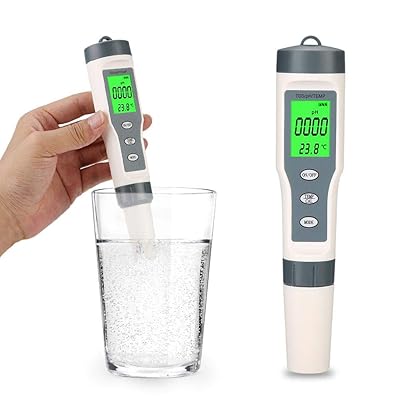
Digital Meter Test Pen

digital-meter-test-pen

If
money is not an issue, then the Digital Meter Test Pen gives immediate, precise
results.

Pros: Precise, immediate results

Cons: Very expensive

Test Kits

Highly
recommended for the aquarium hobbyist. Test kits provide accurate results
against a good range of potential water issues.

Pros: Inexpensive, accurate results.

Cons: Takes time for preparation, not simply
to use compared to test strips.

Test Strips

aquarium-water-test-strips

Not
recommended for the aquarium hobbyist. Test trips assess a variety of issues
ranging from 1 to 6 types of water issues. The results are immediate but may
not be accurate depending on the age of the strips and how they have been
stored.

Pros: Instant results, simple to use,
inexpensive.

Cons: Least accurate, hard to store (sensitive
to humidity), use-by-date.

[su_highlight background="#e2e2e2"]I recommend you use test kits as they are accurate and cost-effective. [/su_highlight]

What are the
issues for aquarium water?

There are many issues for aquarium water that pet fish owners need
to consider.

For the aquarium hobbyist, there are six key elements that need to be tested:

  • Power of Hydrogen (pH)
  • General Hardness (GH)
  • Carbonate Hardness (KH)
  • Ammonia
  • Nitrites (N02)
  • And Nitrates (NO3)

This is a generalization for freshwater and saltwater tanks.

Calcium, salinity, copper, iodine, iron, phosphate, potassium and silicate elements can also affect the quality of your water and health of your fish if you have a saltwater tank.

If you are investing in expensive fish, it would be good to check
for them prior to introducing your fish to their home.

Different fish have different requirements. So it’s important to
do your research and understand the balance your tank needs.

So do we need
to test all of the above water parameters?

The answer could be yes, but then that means you need to buy more than 10 different test kits for each of the different elements listed above.

You might think this could be a lot of work and money. It’s going to take you time, right?

Here is a good thing. You DON'T need to do this.

[su_note note_color="#e2e2e2"]Depending on your tank setup, a freshwater or a saltwater tank, and the specific fish you have in your tank, you just need to focus on some specific kinds of elements/parameters.[/su_note]

And there is good news. Some single test kits that are suitable for fresh or saltwater aquariums can be purchased as one product. They are called master test kits. We will introduce to you the best of these products.

But right before we dive in the best
product reviews, let’s better understand the ideal water parameters for your
aquarium.

What are the ideal
water parameters for your aquarium?

Getting the numbers correct on water parameters for your fish tank is important. There are different parameters for freshwater and saltwater fish.

Freshwater aquarium parameters

[su_csv_table url="https://aquariapassion.com/wp-content/uploads/2019/09/freshwater-aquarium-parameters.csv" header="yes" responsive="yes" fixed="yes"]

Saltwater aquarium parameters

[su_csv_table url="https://aquariapassion.com/wp-content/uploads/2019/09/saltwater-aquarium-parameters.csv" header="yes" responsive="yes" fixed="yes"]

2/ Best aquarium water test kits reviews

So, what do you do?

The following are recommendations to ensure your fish tank
is happy. These are the best test kits we recommend. They will give you the
answer to “what is the matter with your tank”.

Understanding what the issue is the first step to solving
the problem. Guessing will only hurt your fish. Let’s find out what your
options are!

For freshwater aquariums

1/ API Freshwater Master Test Kit

api-freshwater-master-test-kit

[su_button url="https://www.amazon.com/API-FRESHWATER-800-Test-Freshwater-Aquarium/dp/B000255NCI" target="blank" style="flat" size="6" center="yes" icon="icon: hand-o-right"]Check the price[/su_button]

Master Test Kits provide the necessary equipment to test a variety
of potential water issues in your fish tank.

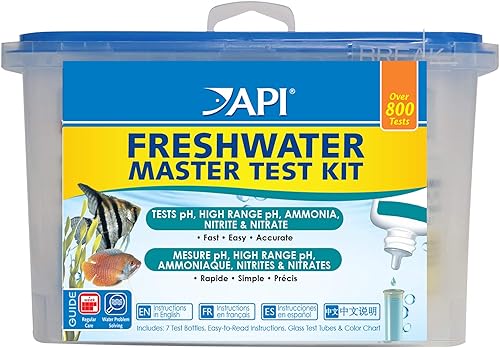
The API Freshwater Master Test Kit includes 7 bottles of testing solution, 1 color card and 4 glass tubes. It accurately measures the water content for ammonia, pH, high range pH, nitrate and nitrite.

This is perfect for the aquarium hobbyist as it is very user-friendly – and cost-effective.

2/  API GH & KH Test Kit

api-gh-kh-test-kit

[su_button url="https://www.amazon.com/API-TEST-Freshwater-Aquarium-Water/dp/B003SNCHMA" target="blank" style="flat" size="6" center="yes" icon="icon: hand-o-right"]Check the price[/su_button]

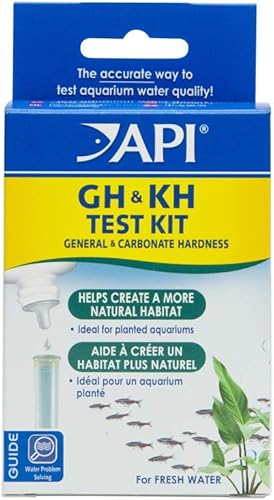
This is a one-use test product for General Hardness (GH) and Carbonate Hardness (KH).

It includes 2 bottles of testing solutions, 2 glass test tubes and
1 color card. It accurately measures the dissolved mineral content of water.

Water hardness directly affects your fish’s environment. Unless
you are changing your water source, this is usually an initial test (when you
set up your aquarium) and then maybe once a month to monitor your tank.

For saltwater aquariums

1/ Salifert Master Reef Testing Combo Kit - Saltwater Aquariums

salifert-master-reef-testing-combo-kit

[su_button url="https://www.amazon.com/Salifert-Master-Reef-Testing-Combo/dp/B00RW64LMI" target="blank" style="flat" size="6" center="yes" icon="icon: hand-o-right"]Check the price[/su_button]

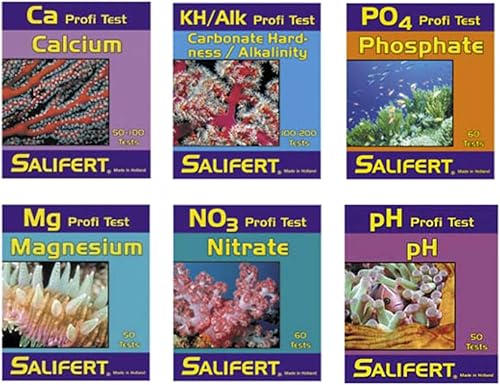
This master kit tests for six elements: alkalinity, calcium, nitrate, pH, phosphate and magnesium. These are the core issues for saltwater tanks.

It's cost-effective
and provides accurate results. The 2 step instructions make it very
user-friendly. It would be good if the instructions were laminated.

2/ Salinity Refractometer for Seawater and Marine Fishkeeping Aquarium

salinity-refractometer-for-seawater-and-marine-fishkeeping-aquarium

[su_button url="https://www.amazon.com/Refractometer-Fishkeeping-Automatic-Temperature-Compensation/dp/B018LRO1SU" target="blank" style="flat" size="6" center="yes" icon="icon: hand-o-right"]Check the price[/su_button]

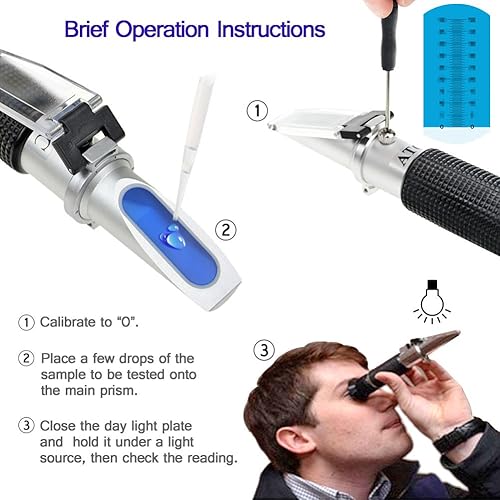
Unique to saltwater tanks, one of the issues is the salinity of the water.

The Refractometer measures on two scales:  the specific gravity and parts per thousand.

It also has automatic temperature compensation.  It’s a reliable monitor for ensuring you have the balance correct. This is important for your fish.

3/ Salifert Iodine Test Kit

salifert-iodine-test-kit

[su_button url="https://www.amazon.com/Salifert-Iodine-Test-Kit-Tests/dp/B001EIWBR2" target="blank" style="flat" size="6" center="yes" icon="icon: hand-o-right"]Check the price[/su_button]

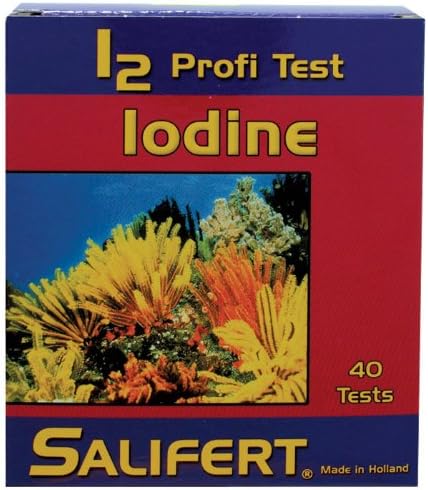
Salifert Iodine Profi-Test measures all iodine compounds for a total concentration result. The results are very accurate as it is free from “interference from other elements found in saltwater”.

This kit is good value as it comes with 40 tests.

6/ ATI ICP-OES Complete Saltwater Water Test Kit

ati-icp-oes-complete-saltwater-water-test-kit

[su_button url="https://www.amazon.com/ATI-ICP-OES-Complete-Saltwater-Water/dp/B01AS2D5ME?ref_=ast_bbp_dp" target="blank" style="flat" size="6" center="yes" icon="icon: hand-o-right"]Check the price[/su_button]

Talk about a one-stop-shop. The ATI ICP-OES Complete Saltwater
Test Kit does it all.

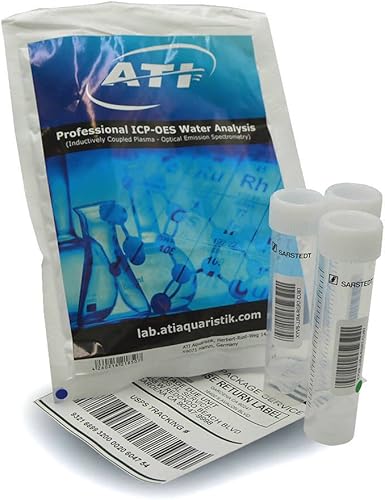
Simply purchase a test kit which includes a prepaid label, send your water in and wait for the results.

They test for boron, bromine, calcium, chloride, magnesium, sodium, sulfur and strontium (major elements). It includes tests for salinity and carbonate hardness. They also test for minor elements including phosphorus and mercury.

The difficulty is waiting for the results and it is expensive.

My picks for saltwater aquarium test kits.

To test your saltwater aquarium, I recommend review options from 1
to 5 as they are most cost-effective. You also have control of the testing and results.

Review option 6 might
be a good option when you want to test all water parameters in your fish tank
and money is not the problem.

3/FAQ

How to use
test kits?

Make sure you read the instructions. Most test kits have a minimum of
two steps.

  • Check the expiry date on your product.
  • Label your test tubes.
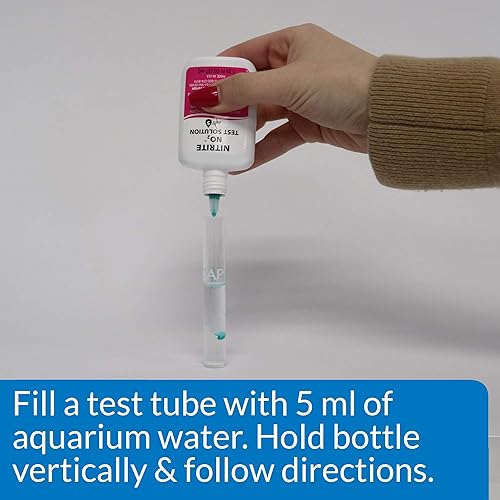
  • Drop in the test solution.
  • Give the test tube a shake to mix the solution with the tank water.
  • Match the test tube with the color chart.

Yes, it is that simple.

[su_note note_color="#e2e2e2"]Note: Do not use your test tubes to gather water from your tank. You don’t want any leftover chemicals from the last test to sneak into your tank, right?[/su_note]

How often
should you test your fish tank?

When you first set up your fish tank, you should test it daily as it settles. This is the key as everything is new and could impact on the water quality.

Once all levels are consistent, you can test weekly.

If your fish tank goes cloudy or your fish seem slow or stressed, test your water.

In many cases, there are one or more elements that have gone high or low. Test daily until your fish tank stabilizes.

What is the
difference between pH and the high range pH?

A pH test checks the level up to a point. If the result is on the
high end, then the ‘high range pH’ test measures more accurately higher levels.
This is particularly important for saltwater fish.

What is the difference in testing freshwater and saltwater tanks?

Saltwater tanks generally take more maintenance than a freshwater tank.
This starts with the fact they require salination. You must create the
saltwater and that balance is the first thing you will need to test for and
monitor. Evaporation can affect the balance.

I bought a
castle and some rocks for my tank. Should I retest?

Absolutely!

You’ve introduced new items to your tank. They can interact with the
water and change the balance of some elements.

4/ Conclusion

You’ve bought an aquarium and support equipments, decided on the
fish you are going to get and you’re putting it all together. The most
important part of the tank is the water. It’s where your fish pets are going to
live. The best way to make sure you are doing it correctly is using a test kit.

There
is no other way to ensure the correct balance. Making a mistake can be costly
with dead fish. The naked eye cannot see the different elements in the water in
your tank. Using test kits helps protect your investment in your fish.

If you use a test kit to care for your fish tank, I’d love to hear your
comments. If you have any questions on testing, you can also leave a message there.

Read the original article at :
Top Rated Aquarium Test Kits For Freshwater And Saltwater Tanks In 2019 (Review And Guide)

Thứ Bảy, 3 tháng 8, 2019

Cloudy Goldfish Tank: The Ultimate Guide To Get Rid Of It.

It can be a bit frustrating to see your goldfish tank
water become a complete mess.

We have all been there. We know how crazy that can be.
But well, tank water has gone beyond the profit-making vibes that we all bury
in our minds. There are of course a lot more to it, one of them is the
cloudiness of your fish tank.

You know what strange is about this cloudiness thing?

Most times, what you see with your naked eye is just a
mere change of your water from that fresh look to a milky white or probably
brown color.

It is actually not that simple. It can be a huge sign
that your goldfish tank lacks good hygiene. Maybe you are not adding the right
proportions of chemicals to your goldfish tank, or you are just being careless
even when you know what to do.

While you are at it, your fishes started to become a
victim of your cloudy goldfish tank. There are lots more you can do to save the
day. You may well figure it out here.

1. What Makes Your Goldfish Tank Cloudy?

You cannot possibly get rid of the cloudiness in a
goldfish tank without having an idea about its causes. This is because there
could be special causes. And each cause has a different treatment method.

It means you can't treat bacteria-oriented cloudiness
the same way you would treat algae-oriented cloudiness.

Let's get down to the point. Cloudiness can be caused
by a number of things.

When I say "a number of things", you should
know that there are whole lots of causes waiting for you right here.

Algae Bloom

Sometimes, the cloudiness of your goldfish tank may be
very severe. So when all of a sudden, the milky white color of bacterial bloom
turns green, then an algae bloom is sure at work.

Unlike bacterial bloom, algae bloom is easy to figure
out with your naked eye.

With a thick greenish hue in your goldfish tank, you
are sure to easily spot an algae bloom.

It is often perceived as the most frustrating form of
cloudy water. You don't want to invest your gaze on this ‘messy thick green
water'.

Causes

Still wondering how these algae bloom thing storms your
tank? Not to worry.

The reasons are simple.

First, it usually starts when you overstock
fishes in your tank or probably overfed them.

Second, it may be that there are overgrowing
numbers of nutrient in your tank water. The nutrients may be nitrate and
phosphate. It is sure to mess up the nice look of your goldfish tank water.

Still wondering how this phosphate and nitrate works.
Your goldfish tank will definitely be invaded by these two nutrients when there
are lots of decayed fish food and waste in your water. Third, it may
just be that your goldfish tank is exposed to excessive direct sunlight, or
your tank lights have been switched on for a long time. It could stir up algae
growth.

Finally, an algae bloom could occur if you fail
to perform the weekly water changes.

Bacterial Bloom

Maybe you don't know, one of the most common causes of
cloudiness in a goldfish tank is bacterial bloom.

Certainly, some less harmful bacteria in your tank are
the brain behind the constant maintenance of the nitrogen cycle. Of course,
this nitrogen cycle keeps your tank super clean. But well, there are also other
kinds of bacteria right there. These bacteria are quite harmful.

When a lot of these harmful bacteria invade your
goldfish tank, your water becomes cloudy. And in the next few days, your water
turns to a milky mess.

Sounds frustrating right? What's more?

Strangely, bacterial bloom doesn't just come. It seems
to be addicted to a specific phase of a tank.

What am I talking about? Bacterial bloom has a more
pronounced period when it invades your tank. It often shows up when your
goldfish tank is still new and the environment inside of your tank is still
prone to microorganisms of similar nature.

One more thing. If by any chance you figure it out in
an old tank, it may be due to seasonal changes, for instance, hot periods.

Dirty Tank

Somehow, dirty water may also have a cloudy look with a
slight yellow color in your tank.

High level of dissolved phosphates, silicates or
heavy metals

Once you have thoroughly washed your gravel and you
find out that the cloudy look is still looming over your goldfish tank, you
should test the pH of your tank water.

When the pH level of your water is high in dissolved
phosphate, silicates and metals, chances are that the cloudiness in your water
is caused by them.

Gravel Residue

Let me say this straight, inadequately washed gravel
can make your goldfish tank cloudy.

Are you wondering how? Once you filled your goldfish
tank with water and it becomes cloudy afterwards, chances are that you didn't
wash your gravel as much you as you should.

2. How Do You Get Rid Of A Cloudy Goldfish Tank?

In many cases, all you just need to do is watch the
cloudiness of your goldfish tank leave on its own.

In other cases, you may just have to exercise a little
patience and settle with simple routine maintenance.

But well, it can be frustrating when you simply can't
resolve the cloudiness of your goldfish tank even with these simple measures.

If you think the cloudiness of your goldfish tank may
prolong more than you ever bargain for or you want to speed up the solution,
this is why I have garnered some treatment methods that are bound to apply to
each cause for you.

Treatment Methods

Algae Bloom

If you are quite sure that algae overgrowth might be
the problem, here are a few treatment methods you should try.

Algae-eating fish

You may not know. Algae-eating fish are often a good
way to deal with algae bloom and the cloudy look of your tank.

How do you get to use it?

Try to buy some algae-eating fish or snails that can
feast on the algae on all corners of the tank. There you go. Your tank can
become clean again with this simple tip.

Algaecide chemicals

If you aren't really confident about the algae-eating
fish thing, try some algaecide chemicals.

Use a Nitrate or phosphate filter media

Unlike other remedies, adding a nitrate or phosphate
remover is more of a control measure than an instant solution.

Where am I going? After your tank water is completely
free from cloudiness, try a nitrate and phosphate filter media.

A good example is Fluval Clearmax.

So what is the essence of it? It will minimize the
likelihood of algae bloom in the long run.

Use Particulate clarifiers

Maybe you don't know, you can also add clarifiers such
as Nutrafin's clear fast to get rid of algae bloom.

Let me be honest with you, it may take a lot of
persistent usages to clean your water completely but it sure does work.

Add UV sterilizer

Will UV Sterilizer make your goldfish tank completely
sterilize? No. Recent studies have it that a good number of living
microorganisms grow each day in a fish tank. So a UV sterilizer will only
reduce the numbers of these harmful organisms including algae bloom in your
fish tank. It can't definitely sterilize the parasites that have already
invaded your fish tank.

Bacterial Bloom

Broad-spectrum antibiotic

If by any chance you think that the problem with your
tank is bacteria, try to use a broad-spectrum antibiotic.

You can add seachem kanaplex, minocycline, and the
likes or contact a veterinarian for appropriate antibiotic treatments.

Sure enough, they are active against negative bacteria
in your aquarium water. It is available in pet supply stores.

What's more? When you decide to add a broad-spectrum
antibiotic to resolve your cloudiness problem, you may need to exercise some
patience.

This is because effective results may take a few weeks
but whatever it is, it is definitely a good catch for cloudy water.

High level of dissolved phosphate, silicate and metal

Add water conditioners

You should treat your tank water with some water
conditioners
in these cases.

Use reverse osmosis water

Dirty Tank

Change your tank water

Once you can figure out what the problem is with your
dirty tank, change your filter and do a 20-30% water change. While you change
your water, remove excess fish food and waste from your gravel.

What's more? How often do you need to perform this
water change?

The answer is quite simple.

This depends on the capacity of the tank, the number of
fish and whether or not you have a good filtration mechanism.

If your tank becomes dirty because of excess waste in
your tank, a 20 percent water change per day until it becomes clean will
perform the magic.

Add Water Clarifier

After you have performed a water change for your tank,
you can well add water
clarifier
to speed up the clarity of your water.

Gravel Residue

Wash inadequately washed gravel

Imagine what it would be like to fill your tank with
some water and in a twinkle of an eye, the tank turns cloudy.

It can be extremely frustrating. But well, there is one
thing you can try. It may be that there is some inadequately washed gravel.

Still wondering how to break free from this? Simply
drain the tank and wash the gravel until the water becomes clear. There you go.

3. Tips On Keeping A Goldfish Tank Clear

[su_list icon="icon: check" icon_color="#3ef323"]

  • Ensure that your filter is always clean.
  • Do not expose your tank to sunlight. It spurs algae overgrowth.
  • Do not overfeed your fish. Eliminate the remnants of any uneaten food after a few minutes.
  • The consequences of overfeeding are fatal. Your tank will be exposed to a lot of algae.
  • Ensure you perform a water change regularly.
  • Do not use an overdose of any products you decide to use for your cloudiness problem.
  • In addition to maintaining the clarity of your goldfish tank, you can well install an EcoBio-stone in your goldfish tank.

[/su_list]

Still wondering how this EcoBio-stone works? It is made
from a natural volcanic stone that is garnished with some less harmful bacteria.

When I say less harmful bacteria, this stone is sure to
regulate the nitrogen cycle of your tank and make it clean regularly.

You may never see the invasion of algae and bacterial
bloom in your tank with EcoBio-stone around you.

Final Thoughts

Keeping your goldfish tank as clear as possible after a
cloudy attack requires a bit of determination and consistency.

If you are to have a healthy goldfish, you should know
that the above tips should be incorporated into your lifestyle just as you take
your bath and eat every day.

You can't possibly break free from these things.
Somehow, they will come at you. This is because your tank water is naturally
prone to things of such nature.

If by any chance the cloudiness in your goldfish tank
persists after all these tips, you should perform water change frequently or
probably contact the nearest veterinarian shop. Then you are good to go on your
journey to a crystal clear goldfish tank.

Read the original article at :
Cloudy Goldfish Tank: The Ultimate Guide To Get Rid Of It.